
Plants and Vegetation of the Rwenzori Mountains
The Rwenzori Mountains contain some of the most distinctive vegetation in Africa. Their location near the Equator, combined with their great altitude and high rainfall, creates several vegetation zones within a relatively small area.
As altitude increases, temperature decreases and the types of plants change. The lower slopes support tropical and montane forests, while higher elevations contain bamboo, giant heathers, and unique Afro-alpine vegetation. UNESCO recognizes the Rwenzori Mountains for this exceptional flora.
Vegetation Zones According to Altitude
The vegetation of the Rwenzori changes progressively with elevation, creating distinct and remarkable ecosystems.
Lower Elevations
Tropical and montane forest.
- Large trees & Shrubs
- Ferns & Climbers
- Mosses & Lichens
Middle Elevations
Bamboo and montane vegetation.
- Dense Bamboo
- Forest shrubs
- Herbs & Ferns
Higher Elevations
The unique Heather zone.
- Giant heathers
- Mosses & Lichens
- High-altitude shrubs
Very High Elevations
The Afro-alpine zone.
- Giant lobelias
- Giant groundsels
- Giant senecios
Highest Peaks
Rock, snow and glacier zone.
- Limited plant life
- Extreme cold & wind
- Ice and snow
The Major Vegetation Types
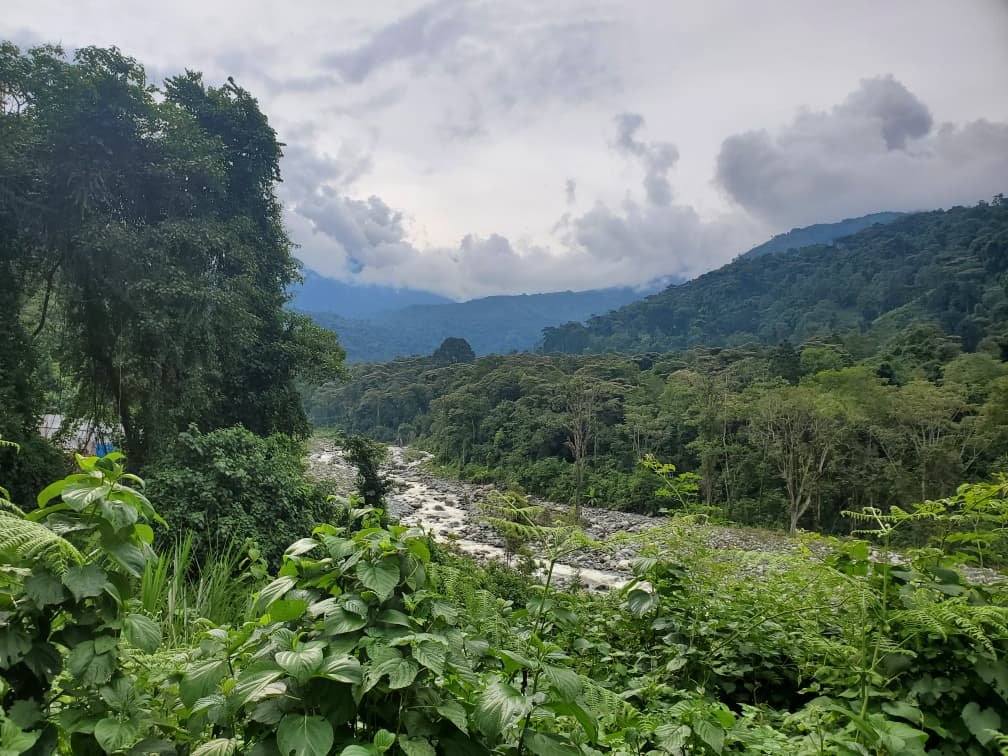
Tropical and Montane Forests
The lower parts of the Rwenzori contain dense forests. These forests receive abundant rainfall and provide favourable conditions for trees, shrubs, climbers, ferns, mosses, and epiphytes.
These forests are important habitats for wildlife and also help protect the mountain’s critical water catchments from erosion.
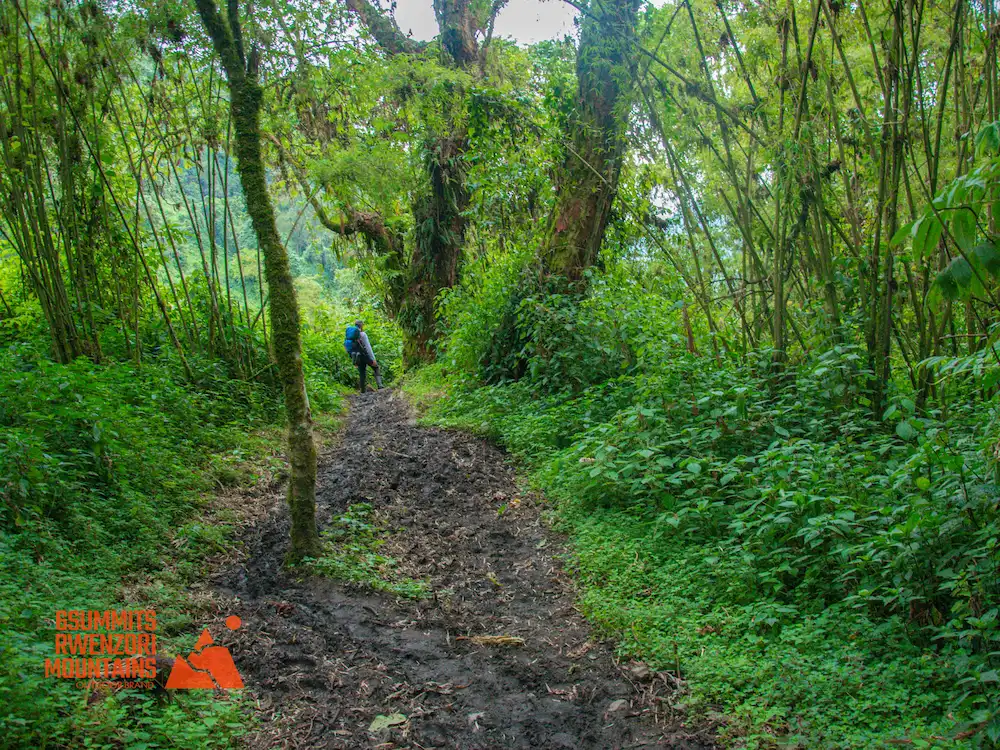
Bamboo Vegetation
At higher elevations, areas of montane forest give way to bamboo vegetation. Bamboo forms dense stands and provides important habitat and food resources for wildlife.
It contributes heavily to soil protection by helping reduce erosion on the steep mountain slopes, representing a key transition zone.
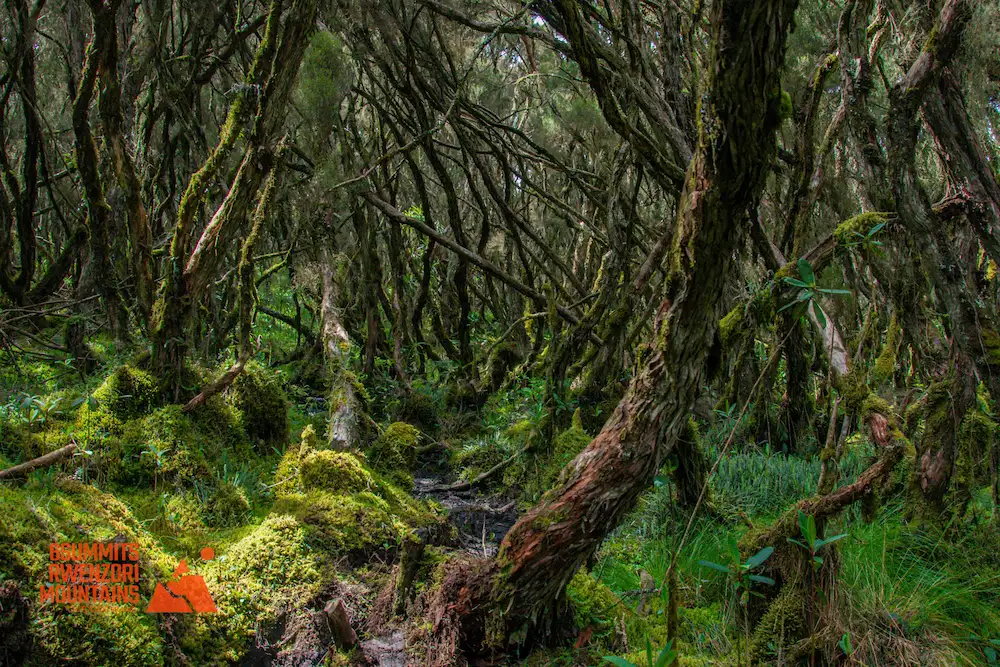
Giant Heather Zone
Higher up the mountains, the vegetation changes again and includes extensive areas of giant heathers. These plants can grow into unusual tree-like forms covered entirely with mosses and lichens.
The cool, wet, and misty conditions of the Rwenzori provide the perfect environment, contributing greatly to the landscape’s distinctive, ancient appearance.
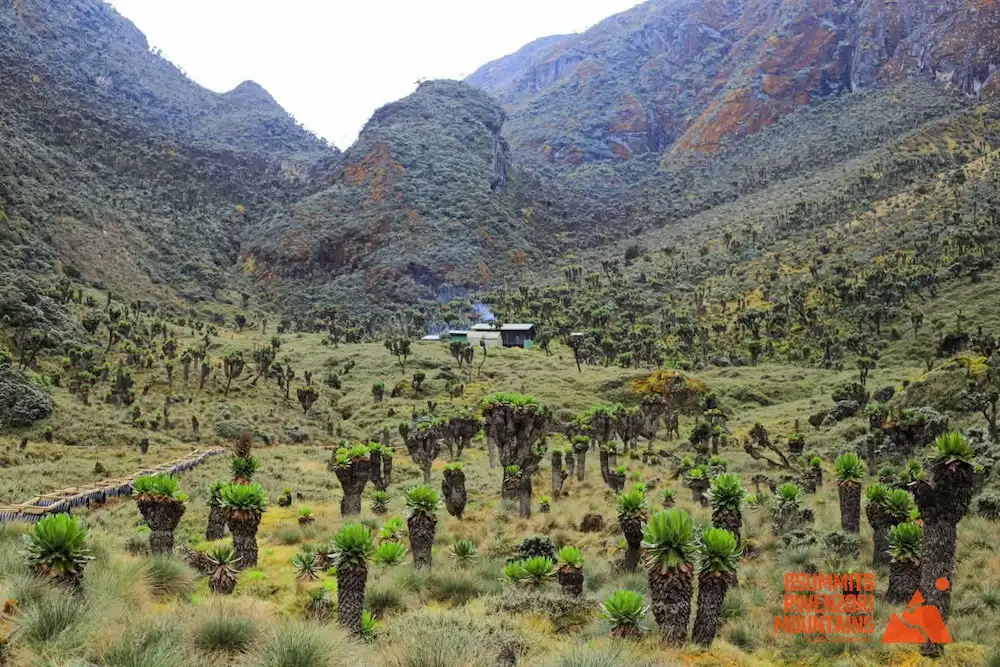
Afro-Alpine Vegetation
Occurring at very high elevations where temperatures are low, the Afro-alpine zone features plants specially adapted to harsh conditions:
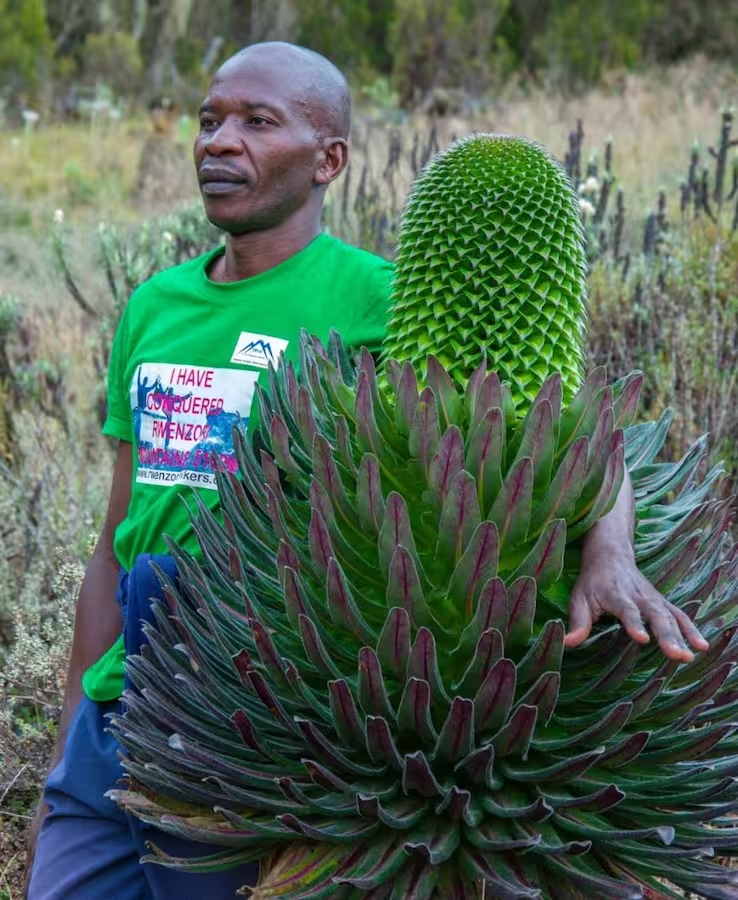
- Giant Lobelias: Large leaf rosettes adapted to the cold.
- Giant Groundsels: Thick stems and recognizable rosette shapes.
- Giant Senecios: Adapted to extreme daily temperature shifts.
Adaptations and Threats
The Rwenzori Mountains are part of the Albertine Rift, an important centre of biodiversity. The isolation of these high-altitude habitats has contributed to the evolution of highly endemic plants that are specially adapted to the severe environmental conditions.
Plants living at these elevations must survive freezing temperatures and strong radiation. Their adaptations include rosette growth, large leaf bases to protect growing tissues, hairy or thick leaves to reduce heat loss, and remarkable water retention structures.
However, this unique vegetation faces severe environmental pressures:
Importance of the Plants
The flora of the Rwenzori performs many vital ecological functions.
Protection of Soil
The dense vegetation networks help hold the soil together and significantly reduce erosion caused by heavy mountain rainfall and steep gradients.
Water Regulation
Forests, wetlands, and alpine vegetation help absorb and regulate rainfall, which directly contributes to the flow of streams and rivers originating in the mountains.
Wildlife Habitat
The diverse plant life provides essential food, shelter, and breeding sites for mammals, endemic birds, insects, and other organisms across all altitudes.
Carbon Storage
The lush forest vegetation stores massive amounts of carbon in the trees, roots, and mountain soils, contributing to the regulation of the global climate.
Scientific Importance
These highly unusual high-altitude plants provide incredible opportunities for researchers to study plant adaptation, evolution, and ecological change.
Conservation for the Future
The establishment of Rwenzori Mountains National Park in 1991, and its recognition as a UNESCO World Heritage Site in 1994, provided crucial protection for the mountain’s exceptional natural beauty and distinctive ecosystems.
The Rwenzori Mountains contain an extraordinary range of plant life because of their combination of equatorial location, high rainfall, and extreme changes in altitude. The giant lobelias, groundsels, senecios, and heathers are among the most distinctive plants of the mountains.
Protecting these plants from habitat destruction and climate change is absolutely essential to ensure that the mountain’s unique ecosystems remain available for scientific research and future generations.