
Glaciers of the Rwenzori Mountains
The Rwenzori Mountains are famous for their snow and ice covered peaks. They are one of the few places in Africa where glaciers occur close to the Equator. The glaciers are concentrated on the highest peaks, particularly Mount Stanley, Mount Speke, and Mount Baker.
The presence of glaciers in an equatorial mountain range is one of the most remarkable physical features of the Rwenzori. However, the glaciers have declined considerably over the past century, making them an important indicator of global environmental and climatic change.
The Major Glaciers
The Rwenzori has historically contained a number of named glaciers across its highest summits.
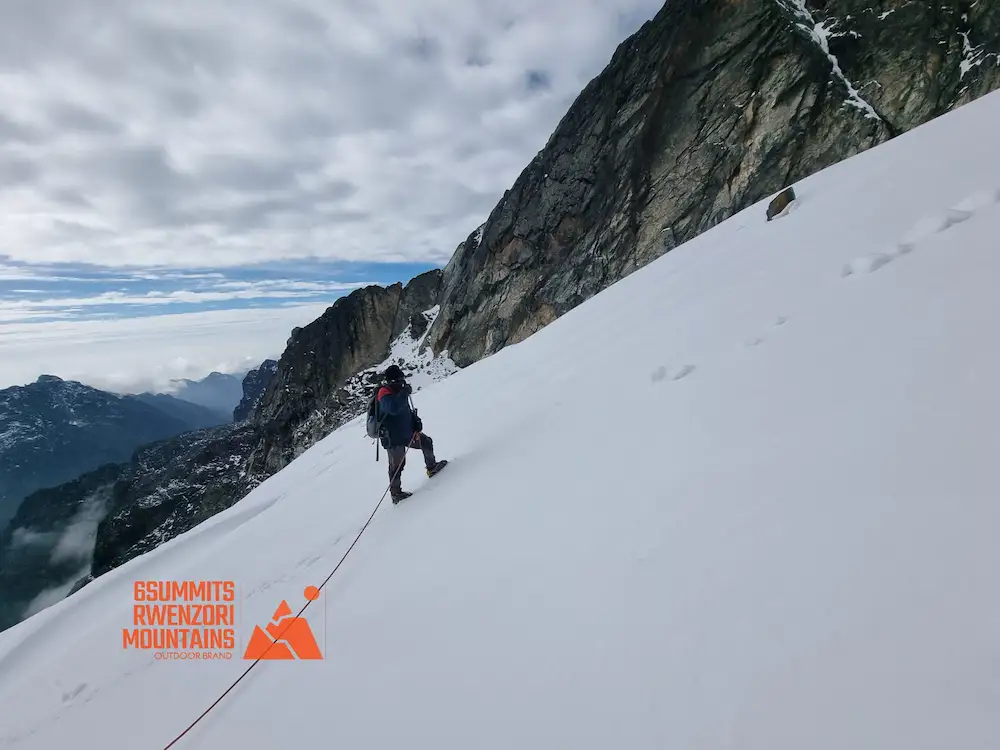
Mount Stanley
The most heavily glaciated massif in the range. Its glaciers occur around the high summit area and include the ice fields associated with the towering Margherita (5,109m) and Alexandra peaks.
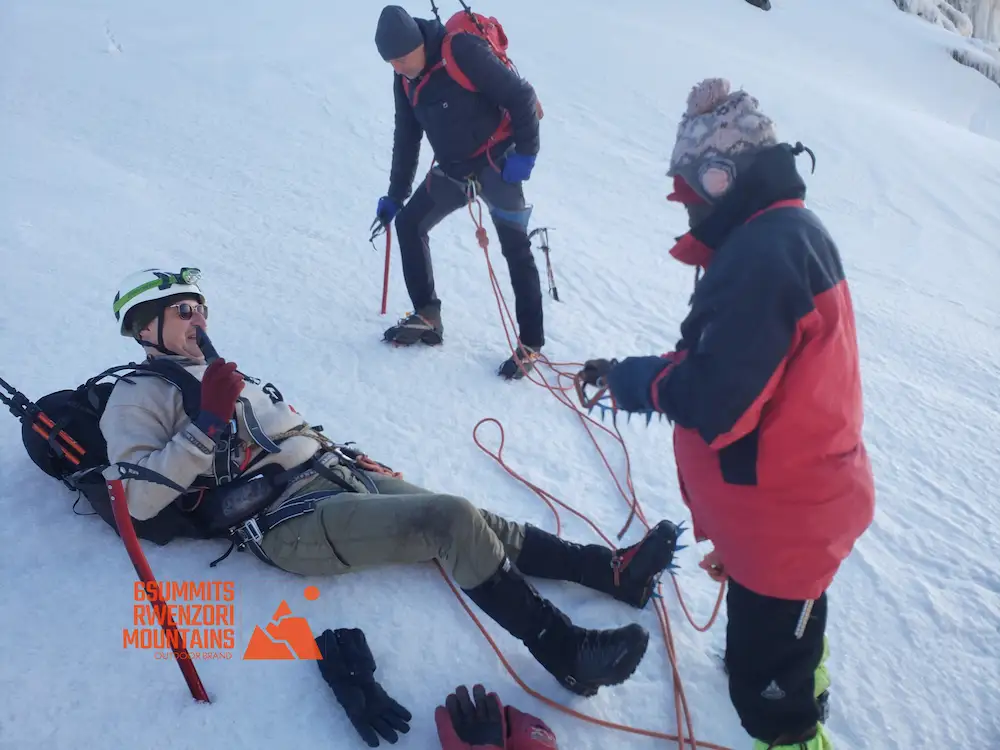
Mount Speke
Mount Speke has historically supported glaciers around its high summit area. While these glaciers are smaller than those found on Mount Stanley, they contribute significantly to the alpine landscape.
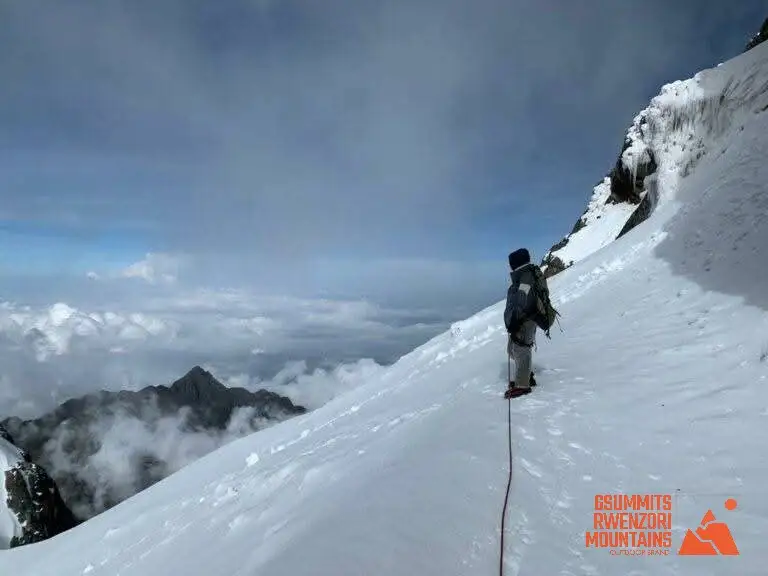
Mount Baker
Mount Baker contains high altitude ice and glacier remnants. Like the other massifs, its glaciers have experienced substantial retreat over the last century.
How the Glaciers Formed
Glaciers form when snow accumulates over many years and is compressed into ice. When enough ice accumulates, it flows slowly downhill under the influence of gravity.
In the Rwenzori, glaciers developed because the highest parts of the mountains feature the perfect combination of environmental conditions:
- Very low temperatures
- High elevations above 5,000 metres
- Heavy snow and ice accumulation
- Areas where melting is naturally limited
- Extremely steep mountain terrain
Shaping the Landscape
Glaciers have played a vital role in shaping the physical landscape of the mountains. As glaciers move, they erode and transport massive amounts of rock.
Over long periods of geological time, this immense pressure and movement has created the dramatic high altitude scenery of the Rwenzori, including:
- Deep U-shaped valleys
- Amphitheatre-like cirques
- Steep, sheer mountain walls
- Rock basins holding high-altitude lakes
- Moraines and glacial deposits
History and Rapid Retreat
Early European explorers were surprised to discover extensive snow and ice in an equatorial region. The Duke of Abruzzi expedition of 1906 documented the high mountains in considerable detail. Photographs taken by Vittorio Sella during this expedition provide valuable historical evidence of the massive extent of Rwenzori ice in the early twentieth century.
Today, one of the most important features of the modern history of the Rwenzori glaciers is their rapid retreat. Historical observations show that the extent of glacial ice has declined dramatically. UNESCO reports that the glaciers have undergone substantial recession.
Factors driving this retreat include:
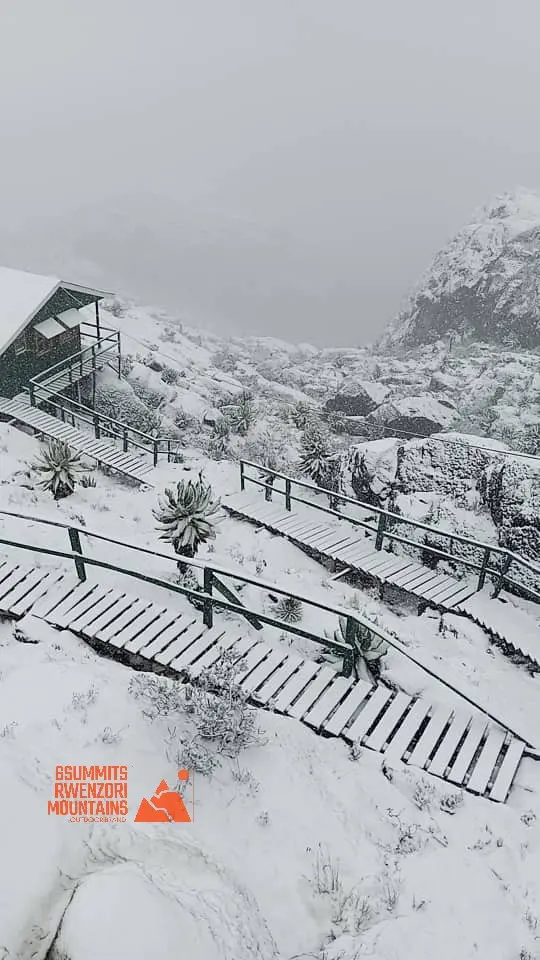
The Value of the Ice
Scientific & Geographical
They provide critical evidence for studying past and present climate conditions and mountain environments. They are an unusual geographical feature simply because they occur so close to the Equator.
Tourism & Mountaineering
The glaciers contribute to the unique attraction of the Rwenzori. Climbers travelling to Margherita Peak encounter increasingly cold conditions, traversing snow, ice, and rocky terrain that require specialized preparation.
Water Resources
Glacial ice forms part of the mountain’s high-altitude water system. While the Rwenzori receives substantial rainfall as a primary source, snowmelt contributes to the streams and wetlands of this vital catchment area.
Conservation & Research
Protected within the Rwenzori Mountains National Park (a UNESCO World Heritage Site since 1994), researchers use historical photographs, satellite imagery, and field measurements to monitor the effects of climate change.
The Future of the Ice
The future of the Rwenzori glaciers is uncertain, but their continued retreat is a major concern. If warming and unfavourable precipitation patterns continue, the remaining glaciers could become much smaller or disappear entirely.
Their loss would mean the disappearance of a distinctive feature that has characterized the highest Rwenzori peaks for centuries. It would also provide further evidence of the profound environmental changes occurring in high mountain regions around the world.
The glaciers of the Rwenzori Mountains are among Africa’s most remarkable natural features. Protecting the Rwenzori ecosystem and continuing scientific research will help improve understanding of these glaciers and what their future holds.