
Climate of the Rwenzori Mountains
The Rwenzori Mountains have a distinctive mountain climate because they are located close to the Equator and rise to more than 5,000 metres above sea level. The climate changes considerably with altitude.
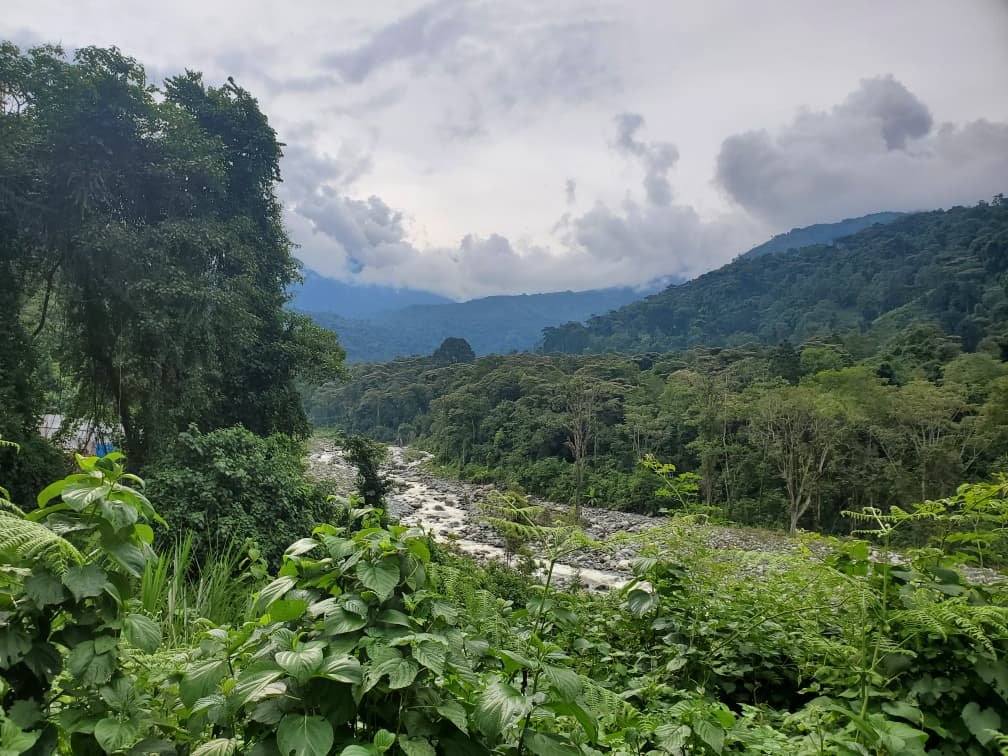
The lower slopes are generally warm and very wet, while the higher elevations are much colder and can experience snow, ice and glaciers. The mountains receive abundant rainfall throughout much of the year. Their climate has also supported the development of different vegetation zones, ranging from tropical forests at lower elevations to alpine vegetation and permanent or semi-permanent ice at the highest levels.
Location & Equator
The Rwenzori Mountains lie close to the Equator on the border between Uganda and the Democratic Republic of the Congo. Their equatorial location means that temperatures at lower elevations are relatively warm throughout the year.
However, altitude has a much greater influence on temperature at the higher levels. As elevation increases, air temperature decreases, producing a sequence of climatic conditions from tropical to alpine. This creates an unusual situation in which glaciers and permanent snow can occur in a region that is otherwise characterized by an equatorial climate.
Rainfall Dynamics
The Rwenzori Mountains are among the wettest mountain areas in East Africa. Moist air from the surrounding lowlands and regional atmospheric systems rises when it encounters the mountains. As the air rises, it cools and condenses, producing clouds and heavy precipitation (orographic rainfall).
Rainfall is critically important because it:
- Feeds rivers and streams
- Supports forests and wetlands
- Maintains mountain ecosystems
- Contributes to the water supply of surrounding areas
- Helps sustain glaciers and high-altitude wetlands
Temperature Variations
Temperature decreases as altitude increases. The lower slopes can have relatively warm conditions, whereas the upper mountain becomes progressively colder. At the highest elevations, temperatures can remain below freezing, allowing snow and ice to form.
The combination of high altitude and equatorial location therefore produces a remarkable range of climatic conditions over a relatively short horizontal distance.
04. Climate Zones with Altitude
The Rwenzori can broadly be divided into several climatic and ecological zones.
Lower Mountain Slopes
A warm, humid tropical climate. High rainfall supports dense vegetation, forests and agricultural activity.
Montane Forest Zone
Temperatures become cooler and humidity remains high. Thick vegetation, mosses and moisture-loving plants develop.
Bamboo & Heather
The climate becomes colder. Bamboo and giant heathers occur extensively in parts of these high-altitude zones.
Afro-Alpine Zone
Temperatures are low and conditions are harsh. Vegetation becomes specialized with giant lobelias and groundsels.
Snow & Glacier Zone
The coldest zone. The highest peaks historically support glaciers and permanent or semi-permanent snow and ice.
Clouds and Humidity
Clouds are a major feature of the Rwenzori climate. Moisture from the surrounding region rises along the mountain slopes and forms clouds. The mountains can therefore experience mist and cloud cover even when surrounding lowland areas are relatively clear.
High humidity contributes to the growth of mosses, lichens, forests and other moisture-dependent vegetation.
Seasonal Climate
Although the Rwenzori are located near the Equator and do not experience four strongly differentiated seasons like temperate regions, rainfall generally varies during the year. The region commonly experiences periods of greater rainfall and relatively drier periods.
The equatorial location means that the difference in temperature between seasons is generally smaller than the difference between low and high elevations.
Climate and Vegetation
Climate strongly influences the distribution of vegetation on the Rwenzori. Warm and wet conditions at lower elevations support tropical and montane forests. As temperature decreases with increasing altitude, the vegetation changes to bamboo, giant heathers and eventually specialized Afro-Alpine plants.
The highest areas are too cold for ordinary trees, and glaciers and rocky surfaces dominate parts of the landscape. This relationship between altitude, temperature, rainfall and vegetation creates a series of distinctive ecological zones.
Glaciers and Climate Change
The Rwenzori glaciers are an important indicator of environmental change. Historical photographs and scientific observations show that the extent of ice in the Rwenzori has declined substantially over time.
UNESCO notes that the glaciers have retreated considerably and that climate change presents an important threat to the mountain environment. The disappearance or reduction of glaciers would represent a major environmental change in the history of the Rwenzori.
Glacier retreat directly affects:
Importance of the Climate
The climate of the Rwenzori Mountains is important for both the mountain environment and surrounding areas. Rainfall contributes to rivers and streams that flow from the mountains. The forests, wetlands and alpine ecosystems depend on the combination of moisture and temperature created by the mountain climate.
The mountains therefore function as an important water catchment area for the surrounding region.
Climate and Tourism
The climate strongly affects tourism and mountaineering in the Rwenzori. Heavy rainfall can make trails muddy and difficult to cross. Low temperatures, fog, rain, snow and ice can make climbing conditions challenging at higher elevations.
Visitors therefore need suitable clothing and equipment when travelling into the higher mountain zones. Despite these difficulties, the distinctive climate is part of what makes the Rwenzori attractive to climbers, researchers and tourists.
Conclusion
The climate of the Rwenzori Mountains is characterized by high rainfall, high humidity, decreasing temperatures with altitude, frequent cloud cover and extremely cold conditions at the highest elevations.
The mountains’ location near the Equator combined with their great elevation produces an extraordinary range of climatic conditions. Warm tropical conditions occur around the lower slopes, while cold alpine conditions and glaciers occur near the summits.
Climate has played a major role in shaping the Rwenzori’s vegetation, rivers, glaciers and ecosystems. Today, climate change and glacier retreat are among the major environmental issues affecting the mountains.